
A thousand miles without a thermometer
For years, the medications that keep Stephen V. alive made traveling risky and stressful. But on a roadtrip in June, he finally wasn't the one watching the temperature.

Stephen V. was diagnosed with metastatic prostate cancer 15 years ago. His prognosis at the time was five years.
A surgeon at one of the top cancer centers in the country told him the goal was to keep him alive long enough to reach the next generation of drugs. The next generation arrived, and Stephen reached it. Today he takes the gold-standard oral treatment. Right now his monthly labs are exactly where they should be, and he intends to keep them there. A ruined pill costs him a day of protection he can't get back.
"I've got no wiggle room. Eventually the cancer adapts and just ignores the medication, so the object is to keep it effective for as long as we possibly can."
The hard thing about room temperature
Stephen's medications don't need to be frozen, or even refrigerated. They need to stay at room temperature. Specifically, USP Controlled Room Temperature (CRT) which is 20°C to 25°C (68°F to 77°F) with allowed excursions between 15°C and 30°C (59°F to 86°F).
That sounds easy until you try to guarantee it for days at a time, in a car, in a parking lot, in a dorm room, on a bus. Room temperature is only "controlled" as long as the room cooperates, and rooms don't cooperate. One of Stephen's drug manufacturers won't stand behind the medication if it drifts outside that band.
So for years, he did it by hand.
He carried an instant-read thermometer everywhere, sitting right next to an insulated cooler that held his pills. The cooler wasn't there to cool anything, only to buy him time while he chased the temperature: nudging the car's climate control whenever the reading drifted three or four degrees, doing the same dance with hotel thermostats at night.
And it mostly worked, right up until one night last fall.
Flying home through O'Hare, his flight delayed six hours, Stephen fell asleep on the floor near the gate. He woke up drenched in sweat.
Something mechanical had fired up beneath the floor and was pushing heat straight up into his carry-on. He checked the thermometer. 89°F inside the container. The upper limit on his medication is 86°F. Those doses were gone.
He was lucky. It was the last leg of the trip and he had replacements waiting at home. Had it happened on the way out, the trip would have been over before it started.
That night is why Stephen went looking for someone like us.
A different kind of customer
We build the Medstow 5L-I, a portable active cooler that holds a set temperature on its own, running off its battery in a car or plugged into a wall. Most of what we do is business-to-business for medical couriers, phlebotomists, and same-day cold chain for labs and hospitals. Stephen was something new. A single patient using the unit for himself.
He turned out to be one of the most thorough customers we've ever worked with. Stephen is an engineer and he approached the cooler the way he approaches his own treatment: by understanding every part of how it works. He ran it for days in his home first, watching the data portal until the temperature line was, in his words, rock solid in the middle of the CRT band. What he wanted, after years of watching, was something he could stop thinking about.
"I wanted to get it as soon as possible before I traveled, so I could watch it and have a good level of confidence before I was depending on it. What I saw over those days impressed me, both as a patient and as an engineer."
The trip
In June, Stephen made a road trip with less risk and less stress than he'd ever had since taking cancer drugs. From just outside Dayton down to western North Carolina for a week-long retreat, then home again. He drove, packed the 5L-I in the car with his medications inside, and strapped it upright with Velcro against the seat.
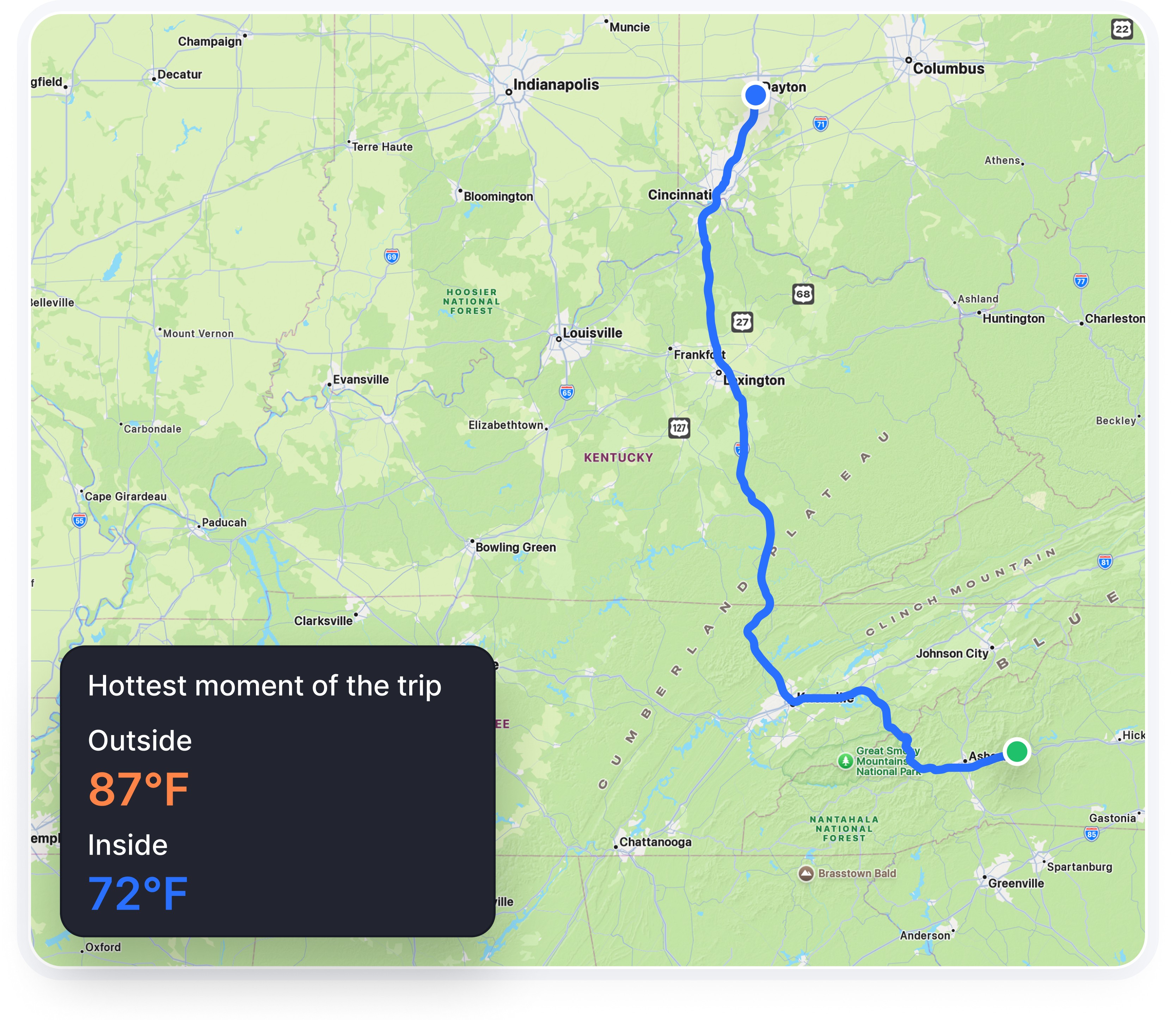
On the way down, he was cautious. He didn't yet know how fast the car would heat up, so he carried the unit inside every time he stopped. By the drive home, he'd seen enough of the data to trust it. He left it in the car through lunch stops in the Southern sun. At one point the cooler recorded an exterior temperature of 87°F, hot enough to ruin Stephen's medications. At that exact moment, it was a perfectly safe 72°F inside the cooler.
At the retreat, the unit plugged into the wall of his dorm room and simply ran. Stephen checked it periodically instead of every few minutes, and never touched a thermostat all week. He noted that some of the other dorms had no air conditioning and sat in the mid-80s day and night. In one of those, the thermostat dance would have been a losing battle. For the unit, no difference at all.
What the data showed
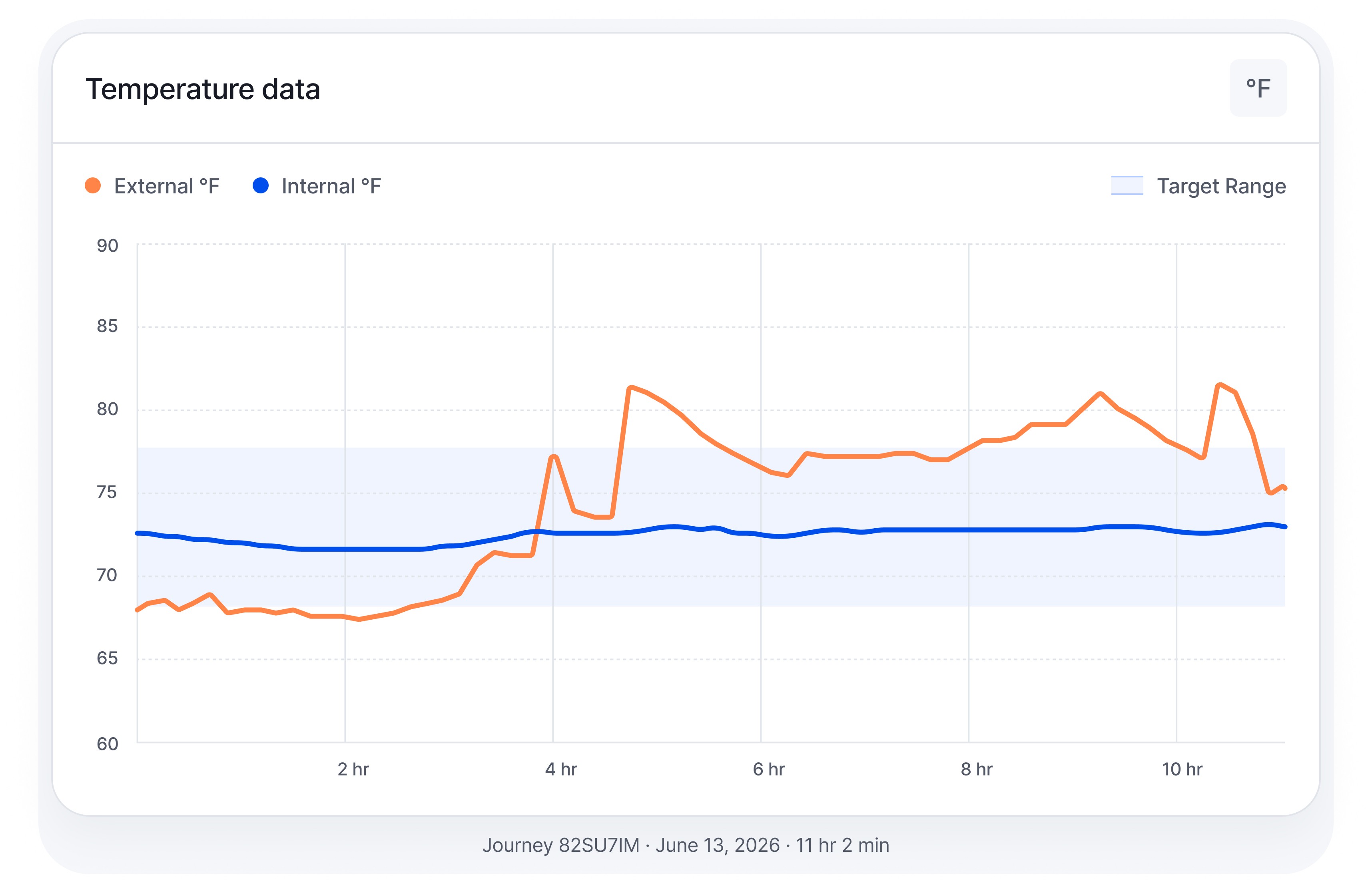
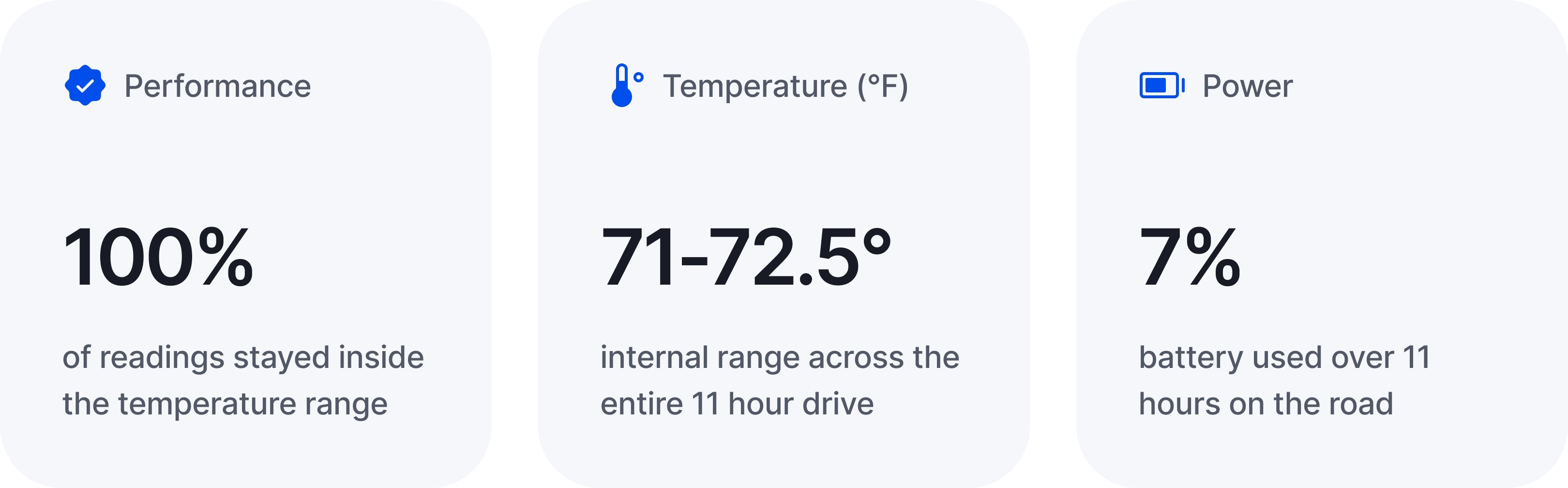
Across the 11-hour drive, with the outside temperature swinging from the high 60s to the low 80s inside the car, the medication compartment never left a tight band around 72°F.
What it actually gave him
"The Medstow 5L-I exactly meets my needs for protecting temperature sensitive cancer medications while traveling. With this unit, for the first time in years I don't have to constantly use a thermometer to monitor temperatures and manually adjust vehicle and hotel thermostats to keep my meds in the required USP Controlled Room Temperature range. The unit continuously keeps them at the right temperature whether operating on batteries en route or plugged in while at my destination. As a cancer patient, I appreciate the unit's ease of use and the peace of mind it gives me. As an engineer, I'm impressed with its elegant design and performance."
One phrase in there worth calling out: for the first time in years. The technology is almost beside the point. What the 5L-I gave Stephen back was a trip, and the freedom to take it without the thermometer sitting on his lap the whole way.
Where this goes next
Nearly everything Artyc has built until now has been for businesses moving other people's samples. Stephen is the first time the product has done its job directly for the patient, in his own hands.
He has one simple request for the future. An audible alarm so that if something ever did go wrong while he slept, the unit would wake him. He's built his whole life around catching problems early, and he'd like his cooler to do the same.
There are a lot of patients carrying thermometers and adjusting thermostats, holding their breath through every trip. For a medication that only works inside a narrow band, and a disease that punishes every missed day, that's a dangerous way to travel.
Stephen pays closer attention than most, and that attention has kept him here. For one week in June, he got to hand a piece of it off and just go on his trip.